

.svg)

In waste management, infrastructure has always meant the same thing: expensive, centralized facilities that process high-value materials for distant markets.
The Problem
How ReForm Plastic Made Community-Owned Recycling Profitable
In waste management, infrastructure has always meant the same thing: expensive, centralized facilities that process high-value materials for distant markets. Communities generate the waste, but rarely benefit from its value. The economics work for corporations and municipalities, but leave local communities dealing with pollution while value flows elsewhere. What if waste infrastructure could work the opposite way—decentralized, community-owned, and profitable for the people closest to the materials?
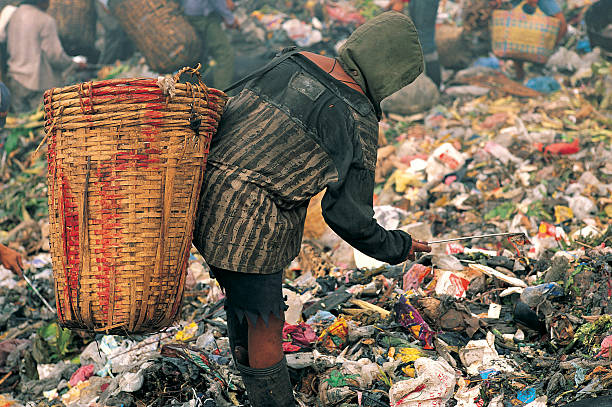
The Challenge When we began developing ReForm Plastic in 2020, the global recycling system had a fundamental problem: it only worked for valuable materials. PET bottles, aluminum cans, and clean cardboard found their way into recycling streams. But the materials causing the biggest environmental problems—plastic sachets, agricultural films, mixed waste, ocean-bound plastics—had no economic pathway back into productive use.
Meanwhile, communities dealing with these waste streams had no infrastructure to capture their value. Informal collectors worked without fair compensation. Local entrepreneurs lacked technology to process materials profitably. Waste that could become valuable resources was being burned, buried, or dumped in waterways.
We saw an opportunity to flip the entire model.
The Solution
Why We Were Positioned to Lead Since 2016, Evergreen Labs had been proving that circular economy solutions work when they create economic value for communities. We don't build systems that require permanent subsidies or depend on charity. We build systems where environmental responsibility becomes economically advantageous.
For ReForm Plastic, this meant creating infrastructure that: made waste processing profitable for communities without external dependency; handled the materials no one else would touch; competed with virgin alternatives on price and quality; could be owned and operated by local entrepreneurs; scaled across diverse geographic and economic contexts.
Building Accessible Technology Our approach wasn't just about recycling—it was about democratizing access to waste infrastructure through a franchisee model that communities could own and operate profitably.
For Communities: We provide complete technology packages, training systems, and ongoing support that enable local ownership. Instead of being dependent on distant facilities, communities can process their own waste streams and capture the economic value locally.
For Collectors: We create transparent payment systems that turn waste collection from survival work into dignified employment. Fair compensation, safety equipment, and integration into formal supply chains transform informal collection into professional service.
For the Environment: We handle materials conventional recycling won't touch—ocean-bound plastics, agricultural films, mixed waste streams. These materials become durable products competing with virgin alternatives on price and performance.
For Markets: We create multiple product streams from single waste inputs—boards for construction, furniture components, signage materials. Diversified outputs create market resilience and maximize material utilization.
The Impact
What We Discovered The response exceeded our expectations. Communities across Asia and Africa were ready to own waste infrastructure—they just needed technology designed for their contexts and economics that worked without external subsidy.
Starting with our pilot facility in Hoi An in 2020, ReForm Plastic now operates: 15 franchisee facilities across 11 countries in Asia and Africa; 10,738 collectors empowered with fair payment systems; 2,133 tons of materials upcycled into valuable products; 2,850 tons recovered from oceans and waterways; 30-50% lower GHG emissions than alternative disposal methods.
The Honest Reality Building decentralized infrastructure required solving challenges we learned about through direct implementation: technology adaptation (equipment redesigned for local power systems, maintenance capabilities and material streams); quality standardization (training programs and quality control across diverse franchise locations); market development (proving quality and educating customers about products made from previously worthless materials); financial sustainability (economic modeling and business support ensuring long-term viability without external subsidy).
Beyond Individual Facilities Each successful franchise demonstrates that community-owned infrastructure works economically, encouraging replication and creating demand for supporting services. Our Life Cycle Assessment, verified by PXP Sustainability, confirms 30-50% lower greenhouse gas emissions compared to conventional waste disposal methods, with 1-4 year payback periods for franchisees.
A Model Designed for Replication While ReForm facilities operate across 11 countries, the model addresses challenges faced by communities dealing with unrecyclable plastic waste, informal collectors seeking fair compensation, entrepreneurs wanting profitable environmental businesses, EPR-implementing governments, and organizations needing proven decentralized waste infrastructure.
Looking Ahead Expansion plans include additional franchise locations, enhanced training and technical support, integration with EPR compliance systems, and expanded product lines in the near term; and technology licensing, regional franchisee networks, policy collaboration, and industry partnerships in the long term.
Circular Economy Insights, Straight from the Field
Get research, case studies, and stories from building circular economy systems across Southeast Asia and beyond— from the people doing the work.

Evergreen Labs builds the circular economy in Southeast Asia and beyond.


Quick Links
About UsVenture & ProgramsFor Investors & FundersKnowledgeSystem & ServicesPartnershipsCareersContact UsContact
68 Circular Road #02-01 Singapore 049422
Vietnam Country Office:
Floor 2, Hoa Phan Building, 75 Pham Tuan Tai, Ngu Hanh Son Ward, Da Nang City
Philippines Country Office:
6th Floor, One Ayala Avenue Tower 2, Ayala Avenue, Ayala Center, San Lorenzo, Makati City NCR, Philippines, 1223
Copyright © 2026 Evergreen Labs. All rights reserved.
.svg)